



Dyslexia and polyphony
Research Topics
Very similarly to the case with stuttering, I proposed that there might be a positive correlation between the presence of vocal polyphony and a higher prevalence of dyslexia. This idea was another offshoot of the idea of asynchronous shift to the speech of different human populations. Even if you are only interested in the topic of dyslexia, I would still also suggest to read about the similar correlations between polyphony and stuttering referred to in the previous section. For further reading on the topic of dyslexia and polyphony, you can read the following excerpts from my 2006 and 2011 books.
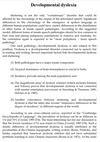
[...] Stuttering is not the only “evolutionary” disorder that could be affected by the chronology of the origins of the articulated speech. Significant differences in the chronology of the emergence of spoken language in different human populations could have caused differences in the distribution of other forms of innate speech pathologies. According to the suggested model, different forms of innate speech pathologies should be less common in East Asia and among indigenous populations of America and Australia. So, the correlation again is expected to be “more polyphony – more speech pathology” [... Continue reading]
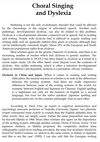
[...] Most scholars agree on the genetic character of dyslexia, and there is an increasing number of studies which link dyslexia to genetic markers. The region on chromosome 6, DCDC2 has been linked to dyslexia as a result of a recent major study. On the other hand, some dispute even the existence of dyslexia. Also unlike stuttering, which is often a transient developmental phase in children’s development, dyslexia is a persistent, chronic condition [... Continue reading]