



Origins of human bipedalism
Research Topics
As bipedalism was arguably the first important step in the road to becoming Homo sapiens, the reason that made our ancestors start to stand erect is widely considered crucial to the whole process of human evolution. I proposed that human bipedalism was directly connected to the aposematic survival strategy used by our distant ancestors. Standing upright in order to seem taller, together with their noisy behaviour - rhythmically united singing and dancing, use of body painting and masks, body odour, and fearless behaviour - was the central defence mechanism, that gradually made our ancestors relatively safe from predators, and is what also turned them into superb aggressive scavengers. (I would also suggest reading about the phenomenon of the “Battle trance”)
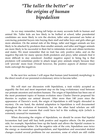
- To learn more about my model, you can see “'The taller the better' or the origins of human bipedalism": Excerpt from the 2014 book Tigers, Lions and Humans.
[...] As we may remember, being tall helps on many accounts both in human and animal life. Taller kids are less likely to be bullied at school, taller presidential candidates are more likely to win the election, taller sales personnel are better at convincing potential buyers into buying their stuff and taller boys and girls often get more attention. On the animal side of the things, taller and bigger animals are less likely to be attacked by predators than smaller animals, and taller and bigger animals are more likely to be successful in their bid to intimidate rivals and obtain territories and mates. We must remember that no trait has only positive sides, and on the negative flip-side for many species (both predators and prey), taller animals find it more difficult to stay unnoticed. Another negative aspect to being big is that predators will sometimes prefer to attack larger prey animals simply because they will ‘provide’ more food. Overall however, the positive aspects of distinct visual traits outweigh the negatives [...Continue reading]