



Vocal polyphony and Stuttering
Research Topics
The idea in nutshell is that there is a positive correlation between the presence of vocal polyphony and a higher prevalence of stuttering in a population. This idea was an offshoot of the idea of an asynchronous shift to speech in different human populations. According to this suggestion, after humans shifted to speech, human musicality lost its primary use in aiding humans’ survival, and gradually started to disappear (a somewhat similar idea of a gradual decline of human musicality was proposed by Mithen in “Singing Neanderthal”). I proposed that the ability of choral singing in different parts of the World followed this trend and started disappearing. Importantly though, as the shift to articulated speech happened in different times in different regions, some regions have already lost vocal polyphony whilst other regions are currently in the process of losing their choral traditions.
You can see here relevant excerpts from my books discussing the correlation between vocal polyphony and stuttering. You can also see my publication that discussed the prevalence of stuttering amongst Chinese populations (I co-wrote this article with Prof. Sheree Reese, speech pathologist from Kean University, New Jersey). In 1991 I did have my first publication on this particular topic, however it was in a newspaper and in Russian, so the text is unfortunately unavailable.
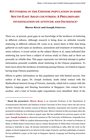
- "Music, Speech and Stuttering" is an excerpt from the 2006 book Who Asked the First Question?.
- "Polyphony, Monophony and Stuttering" Excerpt from the 2011 book Why do People Sing?.
- "Stuttering in the Chinese population in some South-East Asian countries: A Preliminary investigation on attitude and Incidence", publication on the prevalence of stuttering among Chinese, co-written with Prof. Sheree Reese.
[...] There are, at present, great gaps in our knowledge of the incidence of stuttering in different cultures. Although research is being done on attitudes towards stuttering in different cultures (St. Louis et al, 2000) there is little data being gathered on such topics as incidence, assessment and treatment of stuttering in Asian cultures. A recent article on the subject (Reese et al, 1999) indicated that stuttering has never been a subject of serious study in China and so there are presently no reliable data. This paper represents our informal attempt to gather information presently available about stuttering in the Chinese population. To learn more about the incidence of stuttering among Chinese, we looked at regions having large Chinese populations. [... Continue reading]